Automated Malaria Detection (Clinical CV Pipeline)
An academic and clinical research system designed to alleviate the severe shortage of specialized medical pathologists in malaria-endemic regions through automated, explainable microscopy image analysis.
01. The Problem
Manual microscopic examination of blood smears requires 15–30 minutes per slide by a trained expert. In remote clinics, diagnostic delays directly result in delayed antimalarial treatment and increased patient mortality.
02. Architecture & Solution
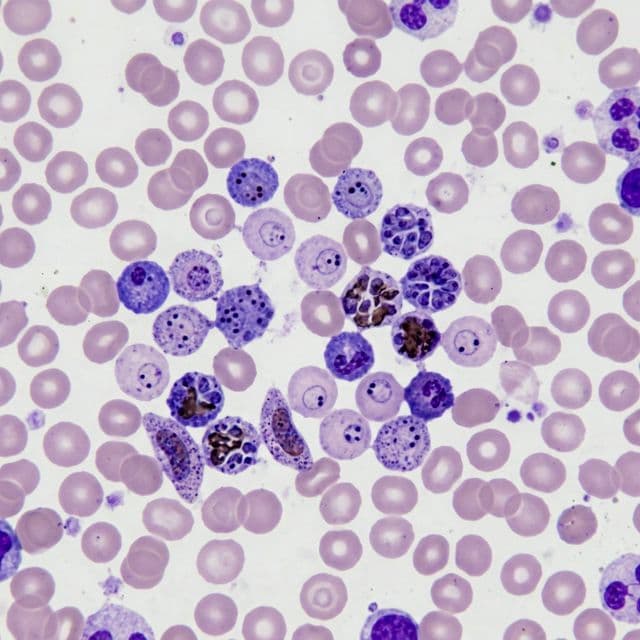
Engineered a two-stage deep learning pipeline: Stage 1 deploys fine-tuned YOLOv11 for high-speed RBC bounding-box localization; Stage 2 feeds segmented cells into stacked CNN classifiers to detect intracellular Plasmodium parasites. Integrated Grad-CAM to render transparent decision heatmaps directly over microscopic anomalies.
Key Architectural Highlights
- ▹Two-stage detection pipeline separating cell localization from parasite classification
- ▹Grad-CAM explainable AI mapping activations back to cellular morphologic features
- ▹Data augmentation pipelines resistant to slide staining artifacts and illumination variances
- ▹Published research documentation and technical defense evaluated at USC Computer Science
Ensemble CNN Pipeline
03. Impact
Achieved >90% classification accuracy on benchmark clinical microscopy datasets while providing medically transparent explainability.
Elgen Mar Arinasa © 2026
Let's Discuss This Project →